
P19- Flag Flying Policy
Flag flying Policy
Adopted by Council on 23rd September 2019.
Flags are traditionally flown by the Town Council from two flagpoles on the front of the Memorial Hall, (with a third available if necessary) for a variety of reasons: to show allegiance, support, or respect or to celebrate. The Town Council will always be sensitive to the views of all sectors of its community and will never use flags for political purposes.
The Council is free to fly the Union Flag at its discretion, and has decided to fly at least one union flag each day as encouraged by Government. If for any reason it is unable to do this, it will strive to fly the Union Flag on specific days recommended by the Department of Culture, Media and Sport
The Union Flag (commonly known as Union Jack) is by convention flown on our properties from 8:00am until sunset. If flown at night the Council will endeavor to have them illuminated. It should be displayed only in a dignified manner befitting the national emblems. it should not be displayed in a position inferior to any other flag or ensign. The Council will hold two spare flags to allow for cleaning.
No permission is needed to fly the national flags and they are excluded from most planning and advertising regulations (but flagpoles may not be).
The correct way up for the Union Flag when flying is with the broader diagonal white stripe at the top left hand side of the flag nearest the flagpole:
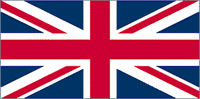 – correct
 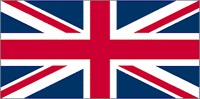 -wrong
The Union Flag must always be flown in a ‘superior’ position:
On the highest flagpole
On the centre flagpole, where there is an odd number of poles of the same height, or
On the left centre flagpole, viewed from the front of the building, where there is an even number of the same height.
The Union Flag is flown at half mast:
- On the death/funeral of the Sovereign, another member of the Royal Family, the Prime Minister or other dignitary – as advised by the Department of Culture, Media and Sport
- At the discretion of the Town Council Manager and Mayor, to commemorate local civic and community dignitaries who have recently passed away.
Other Flags
On St George’s Day, 23rd April, the Flag of St George will be flown. Under the flag flying guidance, on St George’s Day the Cross of St George may be flown from UK Government buildings in England with two or more flag poles. At the Mayor’s discretion, the Flag of St George may be flown to celebrate support sporting events of significance of an England Team.
The Council may choose to fly the Newmarket Town Flag, for civic occasions in the Town or to celebrate local events at the discretion of the Mayor. The Town Flag may also be flown at half mast on the death/funeral of a serving local Councillor, serving local Member of Parliament or serving district or county Councillor representing the Town, or at the Mayor’s discretion for the death of another town dignitary.
Flying more than one flag.
The order of precedence of flags in the UK is: Royal Standards, the Union Flag, the flag of the host country (England, Scotland, Wales, etc.), flags of other nations (in alphabetical order,), the Commonwealth Flag, the European Union Flag, county flags, flags of cities or towns, banners of arms, and house flags.
Where there are two or more flagpoles parallel to the building line, the senior national flag should be the first flag on the left of an observer facing the main entrance of the building. The remaining flags then appear in order of precedence from left to right.
If one flagpole is higher than the rest, then the senior national flag can fly from that flagpole; however no non-UK national flags can be flown on the other flagpoles. These can be used for more junior flags such as county and house flags.
Double-Flagging: Sometimes it may be desired to display two flags when only one flagpole is available. As long as both flags are British this is possible. The senior flag should fly at the top, with a gap of about 30cm (12”), assuming there is enough vertical space on the pole. For example, the Union Flag can be flown over the flag of England, Scotland or Wales (as shown), or over a county, city or house flag. When flags are at half-mast the lower flag must be removed.
When and how should flags be flown at half mast?
When flags are to be flown at half-mast they should be two-thirds up between the top and bottom of the flagstaff with at least the height of the flag between the top of the flag and the top of the flagpole.
When raising the flag it should always be hoisted right up and then lowered back down to half-mast. Likewise, before it is lowered at sunset, it should first be hoisted right up and then lowered back down.
Flags should be flown at half-mast on the following occasions:
From the announcement of the death up to the funeral of the Sovereign, except on Proclamation Day (the Day of the announcement of the Accession of the new Sovereign), when the flags are hoisted right up from 11:00am to sunset,
In the event of the death of a member of the Royal Family, flags should be lowered from the day of death to the day of the funeral, subject to special commands from Her Majesty in each case,
The funerals of foreign rulers, subject to special commands from Her Majesty in each case,
The funerals of Prime Ministers and ex-Prime Ministers of the United Kingdom, subject to special commands from Her Majesty in each case. The Department for Culture, Media and Sport will inform of any other occasions where Her Majesty has given a special command.
When flag flying days coincide with days for flying flags at half-mast, flags should be flown right up:
although a member of the Royal Family, or a near relative of the Royal Family, may be lying dead, unless special commands are received from Her Majesty to the contrary, and although it may be the day of the funeral of a foreign ruler.
Next revision August 2021